We’re here to help
Have a question about Green 100, the pledge process, or how your business can take part? Reach out to us — our team will get back to you as soon as possible.
The Singapore government has stepped in to encourage small and medium enterprises (SMEs) to procure climate solutions to help lighten their power bills, amid rising electricity prices in the wake of the current geopolitical tensions in the Middle East.
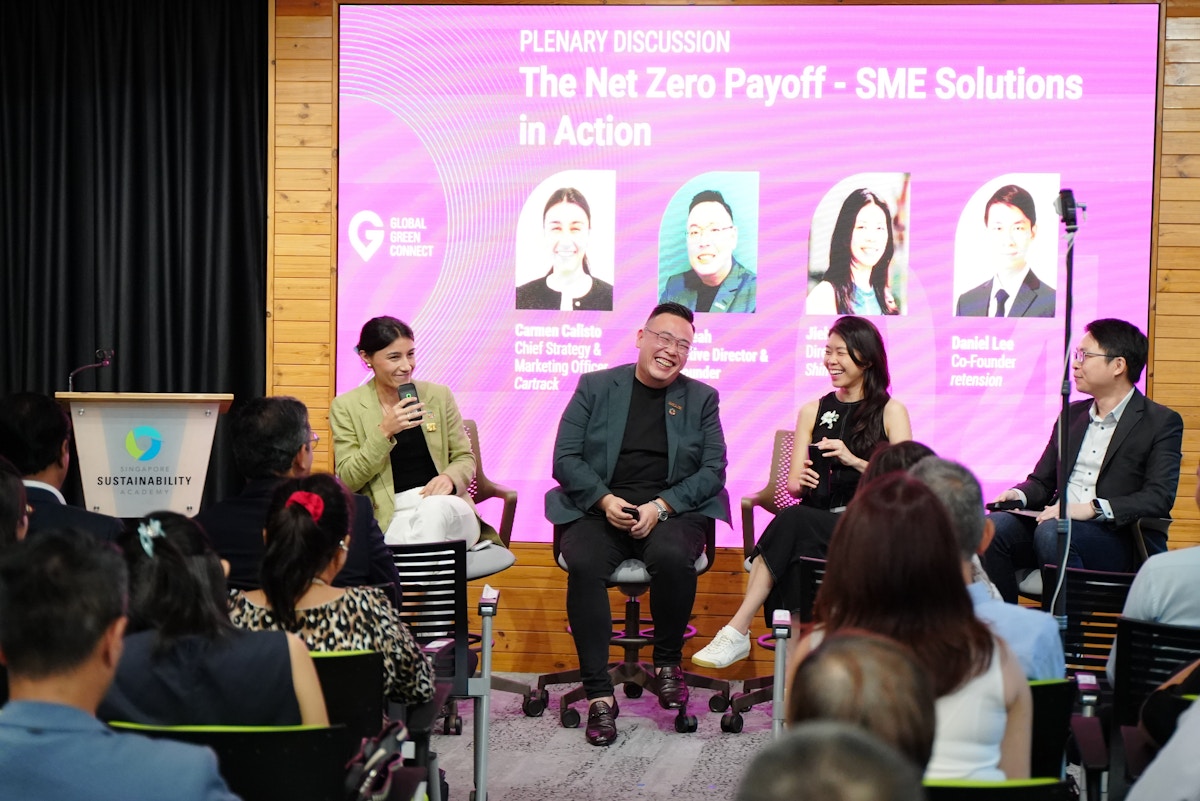
Low Yen Ling, Senior Minister, Ministry of Trade and Industry, urged companies to use the energy efficiency grant to acquire climate solutions that help reduce electricity use during a Government event hosted by sustainability consultancy Global Green Connect (GCC).
Due to the conflict, the Energy Efficiency Grant (EEG) was extended for a year, as it has been scheduled to close in March. It now provides up to S$30,000 grants for energy-saving technologies to firms in any industry, not just food services and retail, manufacturing, construction, maritime, or data centres.
With Singapore's dependence on fossil fuels, the urgency is heightened. IEA data indicate that 94% of the country's electricity is generated from fossil fuels.
In addition to energy efficiency, the minister urged more SMEs to start tracking and reporting their emissions. Sustainability reporting is not required for SMEs, but most SMEs are part of larger supply chains and will increasingly be expected to report on carbon footprints and climate related risks. This year, companies listed on the STI will be expected to report Scope 3 emissions in their value chains.This year, companies listed in the STI will report emissions in their value chains.
Despite the government's push, adoption remains a challenge. Industry surveys show that high costs, consumer apathy, and a global slowdown in climate action have discouraged many Singapore SMEs from pursuing sustainability practices, with only a handful implementing ESG programmes where there is a clear business case.
However, there is a silver lining, according to some industry sources. Others say a recent deadline extension on reporting may be eliminating the ‘soft touch': leaving room for businesses that are truly in the game for the long haul on climate action.
+++
Read the full article here.